

Introduction
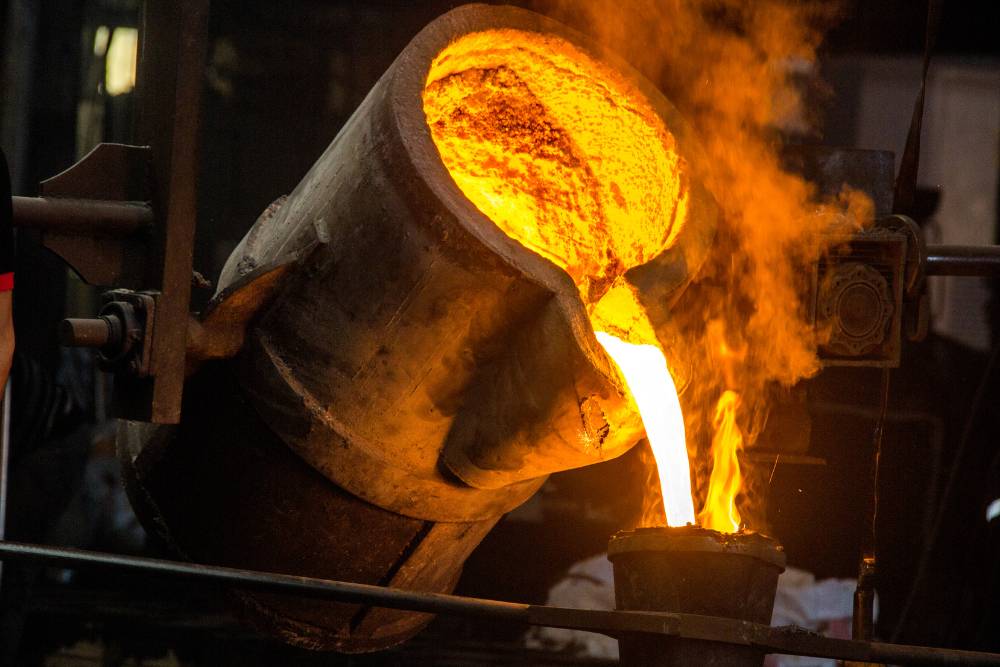
Component quality plays a fundamental role in modern industrial manufacturing. Whether parts are produced for aerospace systems, automotive equipment, energy infrastructure, oil and gas applications, medical manufacturing, or industrial machinery, their accuracy and consistency can influence everything from assembly efficiency to long-term equipment reliability. Investment Casting provides manufacturers with a precise production method for creating complex metal components while supporting dimensional control, repeatability, and high-quality manufacturing outcomes.
Improving component quality is not simply about producing parts that meet dimensional requirements. Manufacturers must also consider design complexity, material selection, production consistency, surface requirements, assembly compatibility, and overall reliability. Investment casting supports these objectives by providing a controlled manufacturing process that produces detailed components for demanding industrial applications.
Supporting Greater Dimensional Consistency
Accurate dimensions are essential when metal components form part of larger mechanical assemblies. Even small variations can affect how components fit together, potentially creating extra assembly work or reducing overall equipment performance.
Investment casting supports dimensional consistency by producing components to detailed engineering specifications. Maintaining controlled dimensions across production helps reduce unnecessary variation between individual parts.
Greater consistency can also make quality inspection more predictable. When manufacturers have clear dimensional expectations, they can assess components more effectively throughout the production process.
This contributes to stronger quality management and greater confidence in finished components.
Producing Complex Designs Accurately
Modern industrial components often include complex geometries that are challenging to manufacture efficiently.
Detailed curves, intricate profiles, thin sections, and other sophisticated features may be required to achieve a component’s intended functionality. Simplifying these features purely because of manufacturing limitations could affect how effectively the final part performs.
Investment casting gives engineers considerable flexibility when designing complex metal components.
The process can reproduce detailed geometries while maintaining the overall characteristics required by the design. This allows manufacturers to create components that more closely reflect engineering requirements without relying entirely on extensive secondary manufacturing operations.
Improving Repeatability Across Production
Quality must remain consistent across an entire production run, not just for individual components.
Manufacturing variability can create significant challenges. If components differ from one another, assembly may become less predictable and additional inspection or rework may be required.
Investment casting supports repeatable production by giving manufacturers a controlled process for producing multiple components to defined specifications.
Improved repeatability helps ensure individual parts remain consistent while supporting smoother downstream manufacturing processes.
For industrial manufacturers producing components at scale, this consistency can contribute significantly to overall production quality.
Supporting Better Assembly Performance
Component quality becomes particularly visible during assembly.
Parts that do not fit correctly may require additional adjustment, machining, or replacement before production can continue. These interruptions can increase manufacturing time while affecting overall efficiency.
Precision investment cast components can reduce these challenges by improving dimensional accuracy and consistency.
When components are produced closer to their intended specifications, assembly teams can work with more predictable parts. This can improve component compatibility and reduce unnecessary fitting work.
Better assembly performance ultimately contributes to the quality of the complete industrial product.
Reducing Unnecessary Secondary Processing
Some manufacturing methods require substantial machining after the initial component has been produced.
Although machining remains essential for many applications, extensive secondary processing can add time and complexity to manufacturing.
Investment casting can produce components close to their required final geometry, potentially reducing the amount of additional machining required.
Depending on the application, specific surfaces, dimensions, or functional features may still require secondary operations. However, beginning with a precisely formed component can simplify later manufacturing stages.
Reducing unnecessary processing can also help manufacturers maintain greater consistency by limiting the number of operations each component must pass through.
Supporting Effective Material Selection
Component quality depends on more than dimensional accuracy. The material used must also be appropriate for the intended application.
Industrial components may experience mechanical loads, temperature changes, pressure, wear, corrosion, or other demanding operating conditions.
Investment casting can work with a range of suitable metals and alloys, giving manufacturers flexibility to select materials based on engineering requirements.
Choosing an appropriate material and combining it with controlled manufacturing helps create components better suited to their intended environment.
This link between material selection and manufacturing precision matters most in industries where component performance is critical.
Reducing Production Variability
Variation can influence quality at almost every stage of industrial manufacturing.
Inconsistent components may require additional inspection, create assembly difficulties, or lead to unpredictable equipment performance.
A repeatable manufacturing process helps minimise these challenges.
Investment casting gives manufacturers greater control over component geometry and key dimensional characteristics. This supports more predictable results across production batches.
Reducing unnecessary variability also makes it easier to identify genuine quality issues because expected component characteristics are clearer.
Supporting More Effective Quality Control
Quality control depends on manufacturers being able to compare finished components against clearly defined specifications.
Consistent manufacturing provides a stronger foundation for inspection because manufacturers can assess expected dimensions, geometry, and other characteristics throughout production.
Investment casting supports this structured approach by enabling manufacturers to build components to detailed design requirements.
Where variation is identified, manufacturers can investigate the issue before unsuitable components move further through assembly or production.
Early identification of quality concerns can reduce unnecessary rework while helping protect final-product quality.
Improving Material Efficiency
Efficient material use can also contribute to overall manufacturing quality and productivity.
Producing components through extensive material removal can create unnecessary waste, particularly with complex geometries.
Because investment casting can produce parts close to their intended final shape, it can reduce the material that must be removed during subsequent processing for suitable applications.
This is particularly valuable when specialised materials or alloys are used.
Better material utilisation can support manufacturing efficiency while helping businesses reduce unnecessary waste throughout production.
Supporting Reliable Equipment Performance
The quality of individual components ultimately influences the performance of the equipment they are installed in.
Poorly manufactured parts can create alignment issues, premature wear, inconsistent movement, or other operational problems.
Precision components provide a stronger foundation for reliable equipment performance because they are designed and manufactured to integrate correctly within the wider system.
Investment casting helps manufacturers achieve this consistency while accommodating the complex component designs required by modern industrial equipment.
Reliable component quality can therefore contribute to greater operational stability throughout the product lifecycle.
Meeting the Requirements of Advanced Industries
Different industrial sectors have different component requirements, but the need for consistent manufacturing quality remains common.
Aerospace applications may involve complex geometries and demanding material requirements. Automotive manufacturers may prioritise repeatability and efficient production, while energy and oil and gas equipment may require components suited to challenging operating environments.
Medical manufacturing and specialised industrial engineering may also require precise components manufactured according to detailed specifications.
Investment casting provides the flexibility needed to support these varied applications while maintaining a strong focus on component accuracy and production consistency.
Supporting Long-Term Manufacturing Efficiency
Improving component quality can benefit the wider manufacturing operation.
More consistent components can reduce rework, simplify assembly, support quality control, and minimise unnecessary production interruptions.
These improvements can help manufacturers use resources more effectively while maintaining the standards expected by customers and industrial markets.
Investment casting supports this objective by combining precision, design flexibility, repeatability, and efficient component production.
Rather than viewing quality only as a final inspection requirement, manufacturers can build it in throughout the production process, from component design through final assembly.
Frequently Asked Questions (FAQs)
How does investment casting improve component quality?
Investment casting supports detailed geometries, dimensional consistency, repeatable production, and controlled manufacturing, all of which can improve component quality.
Can investment casting produce complex metal components?
Yes. The process is particularly well-suited to producing intricate components with detailed shapes and complex geometries.
Does investment casting help reduce manufacturing variation?
A controlled and repeatable investment casting process can help manufacturers maintain greater consistency between components across production runs.
Can investment casting reduce secondary machining?
Depending on component design and final requirements, investment casting can produce parts close to their final geometry and potentially reduce extensive secondary machining.
Why is component consistency important in industrial manufacturing?
Consistent components support accurate assembly, predictable production, stronger quality control, and reliable equipment performance.
Conclusion
Investment casting helps manufacturers improve component quality by combining dimensional consistency, complex design capability, repeatable production, and material flexibility. These advantages can support quality throughout the manufacturing process, from initial component production and inspection to assembly and long-term equipment operation.
As industrial applications become more sophisticated, manufacturers increasingly require components that can meet detailed engineering specifications while remaining consistent across production. Investment casting offers a versatile manufacturing approach that supports these requirements, helping businesses improve component quality, reduce unnecessary variability, and produce reliable metal parts for demanding industrial applications.

Comments are closed.